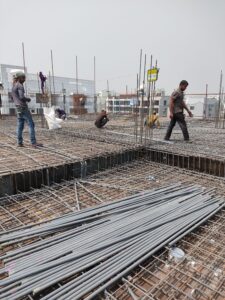
Construction remains an important source of employment across Canada, creating opportunities for labourers, skilled tradespeople, supervisors, technicians and construction managers.
For foreign workers, however, finding a construction vacancy is only one part of the process. A person outside Canada generally needs the appropriate authorization to work, and many employer-specific work permit situations involve an LMIA unless an exemption applies. (Canada)
This guide explains how construction jobs for foreign workers work, which occupations to consider, how LMIA-based recruitment operates, what qualifications employers may look for, where to find legitimate vacancies and what to do after receiving a Canadian job offer.
Important: “Visa sponsorship” is commonly used by international job seekers to describe an employer helping a foreign worker obtain authorization to work in Canada. In practice, the relevant process may involve an employer-specific work permit, an LMIA or an LMIA exemption. A job advertisement mentioning sponsorship does not guarantee that a work permit or permanent residence will be approved.
Construction Jobs in Canada with Visa Sponsorship
Can Foreigners Get Construction Jobs in Canada?
Yes. Canadian employers can recruit temporary foreign workers for construction positions when the applicable immigration and employment requirements are satisfied.
The Canadian Job Bank currently contains construction vacancies associated with temporary foreign-worker recruitment. Recent listings have included construction labourers, construction helpers, carpenters, painters and construction management positions marked “LMIA requested.” (Job Bank)
That evidence is important because it shows that foreign-worker recruitment is not merely a theoretical possibility. At the same time, the availability of a vacancy does not mean every applicant will qualify.
Employers may consider:
Previous construction experience
Trade training or certification
Specific technical skills
Safety knowledge
Ability to perform the duties listed in the job advertisement
Language ability where required
Availability to work the employer’s schedule
Provincial licensing or certification requirements
Eligibility for the applicable Canadian work permit
Entry-level construction labour positions may have fewer formal educational requirements, while regulated trades can require substantially more training, certification or licensing.
What Does “Visa Sponsorship” Mean in Canada?
The phrase visa sponsorship can be confusing because Canada does not have one universal construction “sponsorship visa.”
For many foreign workers, the relevant route is an employer-specific work permit. This type of permit restricts the worker to the employer, occupation and other conditions specified on the permit. (Canada)
Where an LMIA is required, the employer normally has to complete the LMIA process before the worker applies for the work permit. A positive LMIA indicates that there is a need for a foreign worker to fill the position under the applicable program requirements. (Canada)
Some jobs can be LMIA-exempt under specific immigration programs or situations. Therefore, applicants should not assume that every construction job requires an LMIA.
Visa sponsorship does not mean guaranteed immigration
A genuine employer may support a foreign worker’s application, but that does not guarantee:
Work permit approval
Entry into Canada
Permanent residence
A particular immigration program
Long-term employment
The applicant must still satisfy the requirements of the relevant Canadian immigration process.
How LMIA Sponsorship Works for Construction Jobs
A Labour Market Impact Assessment (LMIA) is used in many temporary foreign-worker situations to determine whether there is a need for an employer to hire a foreign worker.
When an LMIA is required, the employer generally needs to complete the applicable recruitment and application process before the foreign worker can use the resulting documentation for a work permit application. (Canada)
The general process can look like this:
Employer identifies a vacancy
Employer determines whether an LMIA is required
Employer completes the required recruitment and LMIA process
Positive LMIA is issued, if the application is approved
Employer provides the required employment and LMIA documents
Worker applies for an employer-specific work permit
IRCC assesses the application
Worker can work in Canada if the required authorization is approved
A crucial distinction should be remembered:
“LMIA requested” is not the same as “LMIA approved.”
Job Bank advertisements can display LMIA requested, meaning the employer has requested an LMIA. That status should not be interpreted as proof that a positive LMIA has already been issued. Current Job Bank listings demonstrate this distinction in practice. (Job Bank)
Applicants should therefore avoid advertisements that promise a guaranteed visa simply because an employer claims to have an LMIA.
Construction Jobs in Canada That Foreign Workers Can Explore
The construction sector contains many different occupations, and requirements vary considerably between them.
Construction Labourer
Construction labourers assist with tasks such as moving materials, preparing work areas, assisting tradespeople and performing general site duties.
A current Job Bank example for a construction labourer includes tasks such as transporting construction materials, erecting and dismantling forms or scaffolding, mixing materials and assisting with demolition. (Job Bank)
Previous construction experience can strengthen an application, although some labourer positions may not require a formal degree.
Carpenter
Carpenters work with wood and other construction materials to build, install and repair structures and components.
Experience with framing, finishing, renovations, formwork or related carpentry work can be valuable.
Electrician
Electricians install, maintain and repair electrical systems.
Because electrical work can be regulated, foreign electricians should investigate the certification and licensing requirements of the province or territory where they intend to work.
Plumber
Plumbers install and repair piping, drainage and related systems.
Trade experience is important, while provincial certification or licensing requirements can apply depending on the occupation and location.
Welder
Welders join metal components using welding equipment and related processes.
Industrial experience, welding qualifications and familiarity with workplace safety procedures can strengthen an application.
Heavy-Duty Equipment Mechanic
Heavy-duty equipment mechanics maintain and repair machinery used in construction, mining, transportation and other industries.
Experience working with heavy equipment, engines, hydraulic systems or related machinery can be particularly valuable.
Bricklayer
Bricklayers construct and repair walls, foundations and other masonry structures.
Relevant apprenticeship or trade experience can be important for this occupation.
Concrete Finisher
Concrete finishers work with concrete during construction projects, including preparing, placing and finishing concrete surfaces.
The occupation is included in Canada’s current trade-occupation category for Express Entry. (Canada)
Roofer and Shingler
Roofers install, repair and replace roofing systems.
Practical experience, physical fitness and safety awareness are important considerations for this type of work.
Painter and Decorator
Painters prepare and finish interior or exterior surfaces using appropriate coatings and application techniques.
Some current Job Bank construction searches include painter positions marked LMIA requested. (Job Bank)
Construction Supervisor or Manager
Experienced professionals may pursue supervisory or management positions involving scheduling, budgeting, crews, contractors, safety and project coordination.
These positions generally require considerably more experience than entry-level construction roles.
Construction NOC Codes and TEER Categories
Canada uses the 2021 National Occupational Classification (NOC) system to classify occupations.
Several construction-related occupations are included in Canada’s current trade-occupation category for Express Entry. The government list includes occupations such as construction managers, welders, electricians, plumbers, carpenters, bricklayers, concrete finishers, roofers and painters. (Canada)
Occupation
2021 NOC
TEER
Construction estimator
22303
2
Construction manager
70010
0
Construction supervisor/related manager
Depends on occupation
Varies
Welder
72106
2
Electrician
72200
2
Plumber
72300
2
Carpenter
72310
2
Bricklayer
72320
2
Concrete finisher
73100
3
Roofer and shingler
73110
3
Painter and decorator
73112
3
The NOC code should be selected according to the actual duties and responsibilities of the position rather than simply choosing a title that sounds similar.
Why the NOC matters
The correct occupation classification can affect:
Employment documentation
Immigration eligibility
Work-experience assessment
Express Entry category eligibility
Provincial immigration pathways
Applicants should therefore compare the actual job duties with the official NOC description.
Construction Worker Requirements in Canada
There is no single set of requirements for every construction job.
An employer hiring a general labourer may focus heavily on practical experience and reliability. A licensed trade position, on the other hand, may require formal training, certification or provincial authorization.
Common employment requirements can include:
Relevant work experience
Trade training
Apprenticeship experience
Technical knowledge
Safety awareness
Ability to use construction tools
Ability to read drawings or plans for certain occupations
Physical ability for labour-intensive roles
Driver’s licence for positions involving vehicles
Relevant certificates or licences
Language ability where necessary for the job
Always read the individual vacancy carefully because the employer’s requirements can differ from the general requirements for an occupation.
Licensing and Certification for Construction Trades
One of the most important issues for foreign tradespeople is provincial or territorial certification.
Canada does not necessarily apply identical licensing rules to every construction occupation throughout the country.
A foreign electrician, plumber or another regulated tradesperson may need to have their qualifications assessed or obtain the appropriate provincial certification before performing regulated work.
For that reason, someone with several years of overseas experience should not assume that experience automatically gives them permission to practise a regulated trade in every Canadian province.
Before accepting an offer, identify:
The occupation’s NOC code
Whether the trade is regulated where the job is located
The provincial certification authority
Whether foreign credentials can be recognized
Whether an examination or additional training is required
This can prevent an applicant from arriving in Canada only to discover that additional licensing steps are necessary.
Construction Jobs and Wages in Canada
Construction wages vary according to occupation, location, experience, employer, union status, project type and overtime.
Current Job Bank foreign-worker listings demonstrate the range of wages that can appear in construction advertisements. Recent examples have included construction labourer positions around $25 per hour, carpenter positions around $32.12 to $38.40 per hour, and some construction management or superintendent roles with annual salaries above $100,000. These are individual vacancy examples rather than national salary averages. (Job Bank)
For that reason, applicants should not assume that every construction worker will earn the same amount.
When comparing offers, look beyond the headline salary and check:
Hourly wage or annual salary
Guaranteed working hours
Overtime
Vacation pay
Benefits
Accommodation arrangements
Transportation
Deductions
Union membership where applicable
Location and cost of living
A higher hourly wage does not necessarily represent a better overall offer if accommodation and other living costs are substantially higher.
Where Construction Jobs Are Being Advertised
Job opportunities can appear across multiple Canadian provinces and territories.
Current Job Bank searches for construction positions associated with temporary foreign-worker recruitment have shown vacancies in provinces including British Columbia, Alberta, Ontario, Nova Scotia, Prince Edward Island, Saskatchewan, Manitoba and Quebec. The number of vacancies changes frequently. (Job Bank)
Places to search include:
Government of Canada’s Job Bank
Provincial employment portals
Construction company career pages
Licensed recruitment agencies
Professional networking platforms
Industry associations
Major Canadian job boards
Start with Job Bank
Job Bank is particularly useful because its temporary foreign-worker search tools can identify employers recruiting workers from outside Canada.
Search terms can include:
Construction labourer
Construction helper
Carpenter
Welder
Electrician
Plumber
Construction worker
Construction supervisor
Construction manager
Use filters carefully and read the entire advertisement before applying.
How to Find Construction Jobs With LMIA Support
A practical search process is more effective than sending the same CV to hundreds of employers.
Step 1: Choose an occupation
Select the construction role that matches your real experience.
Step 2: Check the NOC
Compare your actual duties with the relevant NOC description.
Step 3: Search legitimate job platforms
Use Job Bank and employer career pages before relying on unknown recruitment websites.
Step 4: Look for foreign-worker recruitment information
Some Job Bank vacancies indicate LMIA requested or other temporary foreign-worker recruitment information. (Job Bank)
Step 5: Study the employer
Confirm that the company appears to be a genuine Canadian business.
Step 6: Customize your CV
Highlight the specific construction skills requested in the advertisement.
Step 7: Apply through the appropriate channel
Follow the employer’s stated application instructions rather than paying an unknown person to submit your application.
Step 8: Prepare for an interview
Be ready to discuss your previous projects, tools, responsibilities, safety experience and availability.
How to Prepare a Construction CV for Canadian Employers
Your CV should make it easy for an employer to understand what you can actually do.
Include:
Full name and contact information
Professional summary
Construction occupation
Years of experience
Employment history
Main responsibilities
Tools and equipment used
Trade qualifications
Safety training
Education
Relevant licences
References where appropriate
Instead of writing:
“Worked on construction projects.”
Use specific information such as:
“Assisted with residential concrete work, material preparation, site cleanup and formwork on multi-unit housing projects.”
Specific responsibilities provide much stronger evidence of practical experience.
Avoid adding qualifications you do not possess. Employers may verify certifications, employment history and technical experience.
Documents to Prepare Before Applying
Having your documents organized can make the recruitment process easier.
Depending on the job and immigration route, you may need documents such as:
Valid passport
CV/resume
Employment reference letters
Trade certificates
Apprenticeship records
Educational certificates
Safety certificates
Driver’s licence
Proof of previous work experience
Job offer documents
Employment contract
LMIA documentation where applicable
Other documents requested during the work permit process
The exact documents vary according to the job and immigration pathway.
For an LMIA-required employer-specific work permit, Canadian government guidance indicates that applicants may need documents such as the positive LMIA, employment contract and job offer letter. (Canada)
What Happens After You Receive a Canadian Construction Job Offer?
Receiving an employment offer is not necessarily the final step.
First, determine whether the position requires an LMIA.
If an LMIA is required, the employer must complete the applicable process before you use the resulting documentation for your work permit application. If the job is LMIA-exempt, the employer may have different obligations, including providing an offer of employment number where required. (Canada)
After receiving the required documents, the worker can apply for the appropriate work permit.
Typical pathway
Job offer
LMIA assessment or exemption determination
Employer completes required process
Required documents provided to worker
Work permit application
IRCC assessment
Decision
Travel and employment if approved
Do not begin working in Canada simply because an employer has offered you a job. A person who requires a work permit generally needs the proper authorization before legally working. (Canada)
Can Construction Workers Become Permanent Residents of Canada?
A construction job does not automatically lead to permanent residence.
Nevertheless, certain construction and trade occupations are included in Canada’s current Express Entry trade-occupation category. The current government list includes construction managers, construction estimators, welders, electricians, plumbers, carpenters, bricklayers, concrete finishers, roofers and painters, among others. (Canada)
For the current trade category, candidates generally need at least 12 months of qualifying full-time work experience, or an equivalent amount of part-time experience, within the previous three years, along with the other requirements applicable to the relevant Express Entry round. (Canada)
Other potential immigration routes can include eligible provincial programs or other economic immigration pathways.
The important point is that working in construction does not guarantee permanent residence. Eligibility depends on the applicant’s occupation, work history, language ability, education, immigration profile and the requirements of the particular program.
How to Verify a Canadian Construction Job Offer
Foreign workers should be especially careful when dealing with recruiters who promise guaranteed Canadian jobs or visas.
Before accepting an offer, investigate:
Employer
Does the company have a legitimate Canadian presence?
Does its website look genuine?
Does the company appear to operate in the industry described?
Can the employer be independently verified?
Job
Does the vacancy exist?
Are the duties clearly described?
Is the wage plausible?
Does the position match your actual experience?
Was an interview conducted?
Immigration process
Is the employer clearly explaining the work permit process?
If an LMIA is required, is the employer explaining the process accurately?
Are you being promised guaranteed immigration approval?
Payment demands
Be cautious if someone asks you to pay large amounts simply to “purchase” a Canadian job or guaranteed LMIA.
A legitimate job offer should not be treated as a guaranteed immigration outcome.
Common Construction Job Scams to Avoid
Several warning signs should make an applicant stop and investigate further.
“Guaranteed visa”
No recruiter can guarantee that the Canadian government will approve your work permit.
“Guaranteed LMIA”
An employer’s LMIA process is not the same thing as a guaranteed positive decision.
Paying for a job
Be extremely cautious about anyone demanding money simply to give you employment.
No interview
A company offering a high-paying construction position without properly assessing your experience deserves additional scrutiny.
Unrealistic salary
Compare the advertised wage with legitimate Canadian job listings.
Personal email addresses only
An unusual recruitment email should be investigated rather than trusted automatically.
Pressure to send money immediately
Urgency is often used to prevent applicants from checking the employer or offer.
Fake immigration documents
Never rely on documents that cannot be independently verified.
Construction Jobs in Canada: Who Has the Best Chance?
There is no single profile that guarantees employment, but some candidates can present stronger applications than others.
Experienced skilled tradespeople
Candidates with several years of verifiable experience in carpentry, electrical work, plumbing, welding, masonry or other skilled trades may have stronger applications for skilled positions.
Workers with recognized qualifications
Trade certificates, apprenticeship records and relevant technical training can make it easier for employers to understand your professional background.
Applicants with documented experience
Employment letters, project records and clear descriptions of previous responsibilities provide evidence that your experience is genuine.
Construction workers willing to work outside major cities
Some opportunities exist outside Canada’s largest urban centres. Applicants who consider a wider range of locations may encounter more vacancies.
Workers who understand safety requirements
Construction employers place significant importance on safe work practices. Relevant safety training can therefore strengthen an application where the employer requires it.
Frequently Asked Questions
Can I get a construction job in Canada from outside Canada?
Yes, foreign workers can apply for Canadian construction vacancies, including some positions advertised for temporary foreign-worker recruitment. However, getting hired and obtaining authorization to work are separate stages. (Canada)
Do all construction jobs require an LMIA?
No. Many employer-specific work permit situations require an LMIA, but some positions can be LMIA-exempt under specific programs or circumstances. (Canada)
What does “LMIA requested” mean on Job Bank?
It indicates that the vacancy is associated with an LMIA request. It should not be interpreted as proof that the employer already has a positive LMIA. Current Job Bank listings use this status for a number of construction vacancies. (Job Bank)
Can a construction labourer get a Canadian work permit?
Potentially, depending on the job, employer, immigration pathway and the worker’s eligibility. A genuine job offer alone does not guarantee work permit approval.
Can a carpenter work in Canada without Canadian experience?
Canadian experience is not necessarily required for every position. Overseas experience can be relevant, although employers may require specific skills, qualifications or provincial certification.
Are electricians and plumbers regulated in Canada?
Some construction trades are regulated, and requirements can differ by province or territory. Foreign tradespeople should check the requirements for the exact location where they intend to work.
Can construction work lead to permanent residence?
Potentially. Several construction and skilled-trade occupations are included in Canada’s current Express Entry trade-occupation category, subject to the requirements of the applicable immigration program and invitation round. (Canada)
How much do construction workers earn in Canada?
Pay varies substantially by occupation, experience, province, employer and project. Current Job Bank foreign-worker listings show construction vacancies with wages ranging from the low-to-mid $20s per hour to substantially higher rates for some skilled and supervisory positions. (Job Bank)
Can I apply for a construction job without a degree?
Some construction occupations do not require a university degree. Requirements depend on the position, and skilled trades can require apprenticeship training, certification, experience or licensing.
Where can I find genuine construction jobs in Canada?
Job Bank is one of the best starting points because it provides Canadian employment listings and has tools for finding employers recruiting temporary foreign workers. Employer career pages and reputable job platforms can also be useful.
Final Thoughts
Construction can provide opportunities for foreign workers, but finding a genuine vacancy is only the beginning.
The strongest approach is to identify an occupation that matches your experience, research the relevant NOC, verify whether the trade is regulated, find legitimate employers, understand whether an LMIA is required and prepare the correct documents before applying for a work permit.
Current Job Bank listings show that Canadian employers do advertise construction vacancies associated with temporary foreign-worker recruitment. However, LMIA requested does not mean LMIA approved, and a job offer does not guarantee a work permit or permanent residence. (Job Bank)
For the latest immigration requirements, always confirm the information with the Government of Canada before making an application or paying for professional services.